sample
Sample
Sample
High-Risk Factors of Testicular Cancer
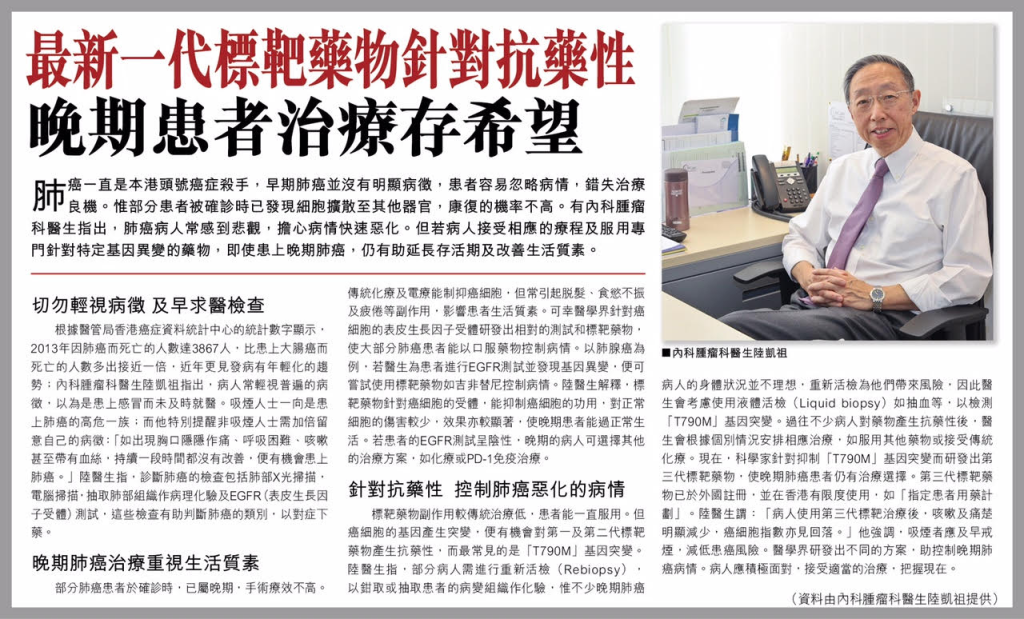
Lung cancer has always been the number one cancer killer in Hong Kong. There are no obvious symptoms of early-stage lung cancer, so patients tend to ignore the condition and miss good opportunities for treatment. However, some patients have cells that have spread to other organs when they are diagnosed, and their chances of recovery are low. Some medical oncologists pointed out that lung cancer patients often feel pessimistic and worry about the rapid deterioration of their condition. However, if patients receive corresponding courses of treatment and take drugs that specifically target specific genetic mutations, even if they suffer from advanced lung cancer, it can still help extend their survival and improve their quality of life.
Do not underestimate the symptoms and seek medical examination as soon as possible
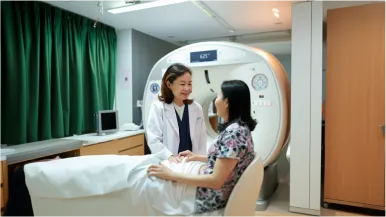
According to statistics from the Hong Kong Cancer Statistics Center of the Hospital Authority, the number of deaths due to lung cancer in 2013 reached 3,867, nearly double the number of deaths from colorectal cancer. In recent years, there has been a trend of younger patients. Lu Kaizu, a medical oncologist, pointed out that patients often underestimate common symptoms and think they are suffering from a cold and do not seek medical treatment in time. Smokers have always been at high risk of developing lung cancer; and he specifically reminded non-smokers to pay more attention to their symptoms: "If you have dull pain in the chest, difficulty breathing, cough or even blood streaks, and it does not improve for a period of time, you may have symptoms. "There is a chance of developing lung cancer." Dr. Lu said that examinations for diagnosing lung cancer include lung X-ray scans, computer scans, lung tissue extraction for pathological testing and EGFR (epidermal growth factor receptor) testing. These examinations can help determine the type of lung cancer. , to prescribe the right medicine.
Treatment of advanced lung cancer emphasizes quality of life
Some lung cancer patients are already at an advanced stage when diagnosed, and the curative effect of surgery is not high. Traditional chemotherapy and electrotherapy can inhibit cancer cells, but often cause side effects such as hair loss, loss of appetite and fatigue, affecting patients' quality of life. Fortunately, the medical community has developed corresponding tests and targeted drugs for epidermal growth factor receptors on cancer cells, allowing most lung cancer patients to control their disease with oral drugs. Taking lung adenocarcinoma as an example, if doctors perform an EGFR test on the patient and find genetic mutations, they can try to use targeted drugs such as gefitinib to control the disease. Dr. Lu explained that targeted drugs target the receptors of cancer cells and can inhibit the function of cancer cells. They cause less damage to normal cells and are more effective, allowing late-stage patients to live a normal life. If the patient's EGFR test is negative, patients with advanced disease can choose other treatment options, such as chemotherapy or PD-1 immunotherapy.
Targeting drug resistance and controlling the progression of lung cancer
Targeted drugs have lower side effects than traditional treatments, and patients can continue to take them. However, if the genes of cancer cells mutate, they may become resistant to first- and second-generation targeted drugs, and the most common one is the "T790M" gene mutation. Dr. Lu pointed out that some patients need to undergo rebiopsy to clamp or extract the patient's diseased tissue for testing. However, many patients with advanced lung cancer are not in ideal physical condition and rebiopsy brings risks to them, so doctors will Consider using liquid biopsy such as blood drawing to detect the "T790M" gene mutation. In the past, when many patients became resistant to drugs, doctors would arrange corresponding treatments based on individual circumstances, such as taking other drugs or receiving traditional chemotherapy. Now, scientists have developed third-generation targeted drugs to inhibit the "T790M" gene mutation, so that patients with advanced lung cancer still have treatment options. Third-generation targeted drugs have been registered in foreign countries and are used on a limited basis in Hong Kong, such as the "Designated Patient Medication Program". Dr. Lu said: "After using the third-generation targeted therapy, the patient's cough and pain were significantly reduced, and the cancer cell index also dropped." He emphasized that smokers should quit smoking as soon as possible to reduce the risk of cancer. The medical community has developed different solutions to help control advanced lung cancer. Patients should face it positively, receive appropriate treatment, and seize the moment.